
Wear Patterns That Signal a Deeper Problem
Tire wear inspection in Carthage for vehicles showing uneven tread loss, visible sidewall damage, or tires approaching minimum depth
Tread that wears faster on one shoulder than the other, or a tire that shows cupping across the face, is not simply aging—it is recording the mechanical condition of the vehicle in a pattern that a trained eye can read. Grave's Tire Service performs tire wear inspections in Carthage to identify what that pattern means: whether uneven wear points to chronic underinflation, an alignment problem, or a suspension component that is no longer holding the wheel at the correct angle. Reading the wear correctly is what separates a useful inspection from a measurement that only tells you when to replace the tire.
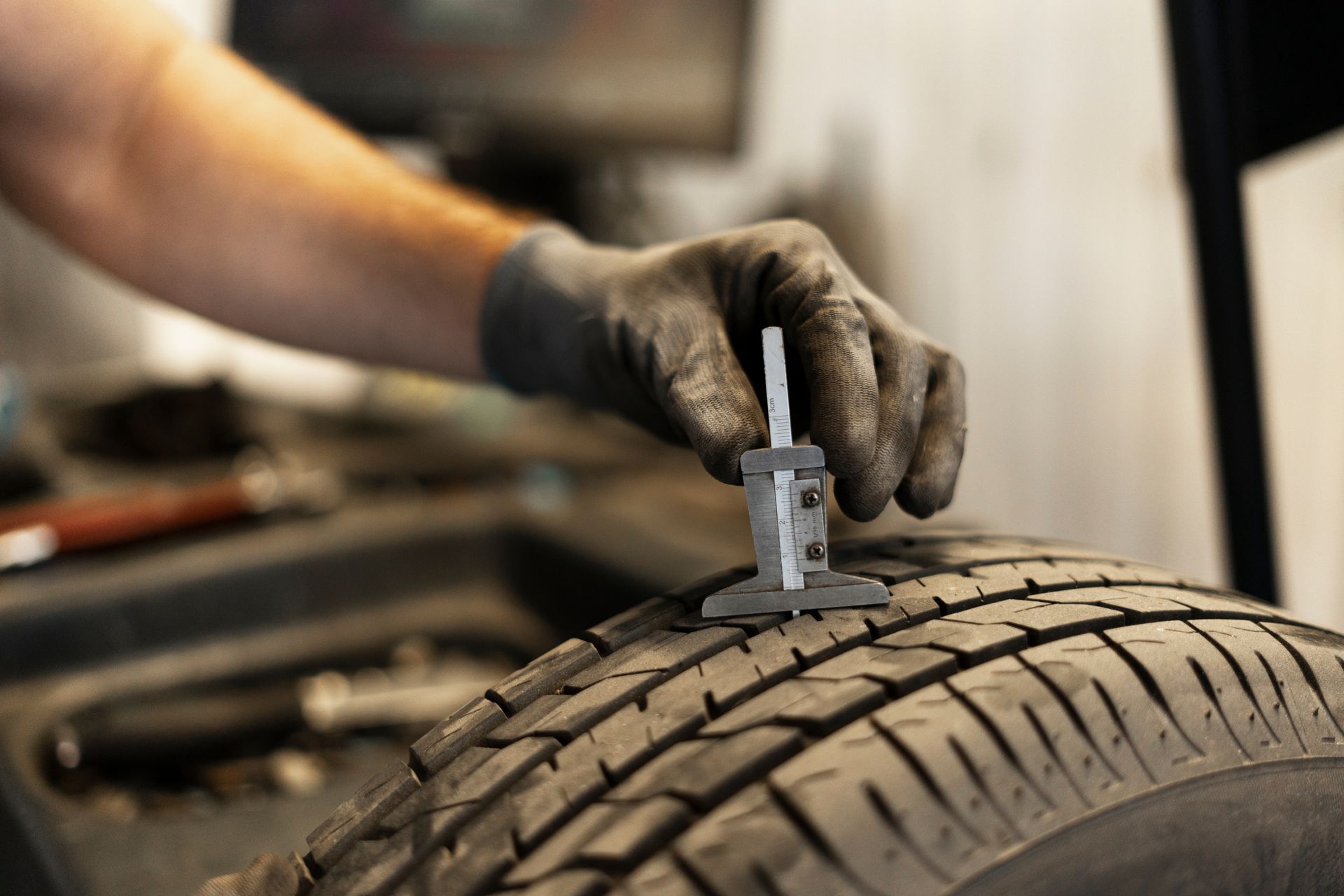
The inspection at Grave's Tire Service covers tread depth measured at multiple points across the tire face—not just the center groove—along with a visual check of the sidewall for cracking, bulging, or impact damage that does not always appear in the tread area. A bulge in the sidewall indicates internal structural failure that makes the tire unsafe regardless of remaining tread depth, and those conditions require replacement rather than continued use.
Bring your vehicle to Grave's Tire Service for a wear inspection that documents current tread depth and identifies whether wear patterns point to a maintenance or alignment issue that should be addressed before new tires are installed.
What Wear Patterns Actually Indicate
Center wear—where the tread is thinner across the middle than at the shoulders—is a reliable indicator of chronic overinflation, because an overinflated tire bulges at the center and concentrates contact there. Edge wear on both shoulders points to the opposite: a tire running underinflated, where the center of the tread lifts and both outer edges carry the load. One-sided edge wear, where only the inner or outer shoulder is worn, typically indicates a wheel alignment issue—camber or toe that is placing the tire at the wrong angle to the road surface.
After an inspection, you will have a clear picture of which tires are within a usable range, which are approaching the 2/32-inch minimum depth that marks the legal limit in most states, and whether any tire shows damage that makes continued use inadvisable regardless of depth. That information allows for a replacement decision based on actual condition rather than mileage estimates.
The inspection also identifies cupping or scalloping—a wear pattern where the tread dips and rises in a repetitive wave around the circumference—which typically points to worn shock absorbers or struts that allow the tire to bounce rather than maintain consistent road contact. Replacing tires without addressing that underlying condition means the new tires will develop the same pattern.
Common Questions About the Inspection Process
These questions address what the inspection involves and how the findings connect to the vehicle's mechanical condition, which is particularly relevant for older trucks and work vehicles common in Carthage and the surrounding rural areas of Panola County.
How is tread depth measured at multiple points across the tire?
A calibrated tread depth gauge is pressed into the main grooves at the center and at both shoulder grooves, giving three separate readings across the width of the tire—this reveals whether the center and edges are wearing at the same rate or diverging in a way that indicates a pressure or alignment issue.
What does one-sided shoulder wear indicate about the vehicle's alignment?
One-sided edge wear typically points to a camber angle that is pulling the wheel inward or outward from vertical, concentrating load on one edge of the contact patch—correcting the alignment prevents the same pattern from developing on replacement tires.
Why does a sidewall bulge make a tire unsafe even if tread depth is adequate?
A bulge indicates that the internal cord structure of the tire has been damaged—usually from impact with a pothole or curb—and the weakened area can fail suddenly under load regardless of how much tread remains on the surface.
How does cupping differ from standard tread wear and what causes it?
Cupping appears as a scalloped or dipped pattern around the circumference rather than a gradual thinning of the tread face, and it develops when worn or weak shock absorbers allow the tire to bounce repetitively against the road surface instead of maintaining consistent contact.
When should a puncture be inspected rather than repaired without removal?
Any puncture requires removing the tire from the rim to inspect the interior for damage before repair is attempted—a nail or screw that appears minor from outside may have caused cord damage inside the casing that makes the tire unsuitable for a patch or plug repair.
Grave's Tire Service can complete a full wear inspection, document tread depth across all four tires, and walk you through what the wear patterns indicate before any replacement decision is made. Grave's Tire Service also performs tire wear inspections in Marshall, Longview, Henderson, and Center.