
ATV Tires Mounted for the Terrain You Run
ATV tire installation in Carthage for recreational, utility, and off-road vehicles needing proper fitment and secure mounting
Selecting and installing ATV tires correctly makes a measurable difference in how the machine handles across the terrain it actually operates on. Grave's Tire Service provides ATV tire installation in Carthage, working through tire selection based on how and where the vehicle is used before a single tire goes on the rim. A recreational trail tire and a utility tire built for hauling loads across rough ground share the same wheel but behave completely differently, and putting the wrong type on a machine undermines both performance and safe handling.
The installation process at Grave's Tire Service begins with confirming the correct tire size for the wheel and verifying that the selected tire's load rating fits the vehicle's operating weight. ATV tires are low-pressure applications—most run between 5 and 15 PSI depending on design—and improper bead seating during mounting is a common failure point that causes slow leaks or sudden deflation on the trail. Tires are mounted, bead-seated, and set to the pressure specified for the tire and intended terrain before leaving the shop.
Bring your ATV to Grave's Tire Service to go through tire options matched to your riding or working conditions before scheduling installation.
What Proper ATV Tire Mounting Actually Involves
ATV wheels are smaller in diameter and operate at significantly lower pressures than passenger or light truck tires, which changes how the mounting process works. Breaking down an ATV tire requires care around the bead area—damaging the bead wire during removal means the replacement tire will never seal correctly. Once the rim is cleared, it needs to be inspected for rim lip damage, especially on machines that have seen hard use on rocky or root-covered terrain where rim strikes are common.
After installation, the tires should sit visibly even on the rim with the bead indicator line running consistently around the full circumference of both sidewalls. If that line disappears on one section, the bead has not seated fully and the tire is not ready for use. Properly mounted ATV tires also hold pressure consistently between rides—a tire that requires frequent air additions is leaking somewhere, whether from the bead, the valve stem, or a puncture that was present before installation.
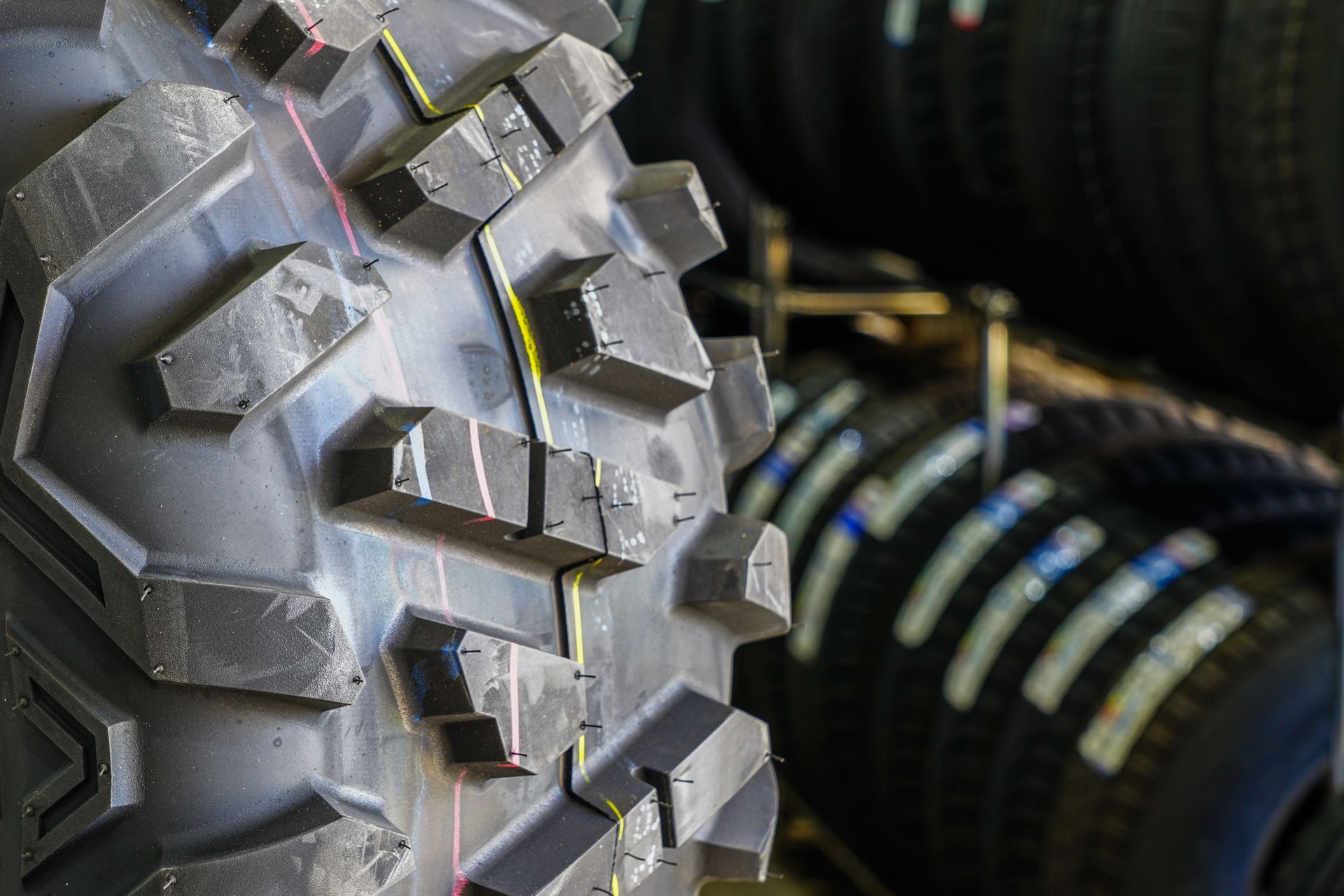
Terrain-specific tread patterns vary significantly in knob height, spacing, and sidewall design. Aggressive open-lug tires built for mud clear debris more effectively but wear faster on hard-packed surfaces. Utility tires with tighter tread patterns handle smoother ground and load-bearing work better. Grave's Tire Service helps narrow the selection based on how the machine actually gets used rather than defaulting to whatever fits the rim.
Questions About ATV Tire Installation and Selection
These questions cover the practical side of ATV tire installation—how the work is done, how tires are selected, and what to watch for once they're on the machine.
How is the right ATV tire size confirmed before installation?
Tire size on an ATV is expressed in a three-number format indicating height, width, and rim diameter. The correct size must match the rim and fall within the manufacturer's fitment range for the vehicle—going significantly wider or taller than stock can create clearance issues in the wheel well.
What tire characteristics separate a recreational tire from a utility ATV tire?
Recreational tires typically prioritize traction and agility with higher, more widely spaced knobs. Utility tires are built for load-bearing and all-day use, using tighter tread patterns that wear more evenly under repeated hauling or towing work in areas like the rural and agricultural properties common around Carthage.
Why does bead seating matter for low-pressure ATV tires specifically?
At operating pressures below 10 PSI, an incompletely seated bead has very little air pressure holding it against the rim. The tire can unseat during a hard turn or obstacle impact, causing immediate deflation at the worst possible moment on the trail.
What should you check on an ATV tire after the first few rides following installation?
Verify that pressure has held at the set level and visually confirm the bead indicator line is still consistent around both sides of the rim. Any pressure loss greater than one or two PSI warrants a leak inspection at the valve stem and bead area.
How does tread direction affect ATV tire performance after mounting?
Many ATV tires are directional and must be mounted with the tread pattern rotating forward in the direction indicated on the sidewall. Mounting a directional tire backward reverses the self-cleaning design of the knobs and significantly reduces traction in loose or soft terrain.
Grave's Tire Service installs ATV tires for riders and property owners throughout Carthage who need the job done correctly the first time. Stop by with your machine or wheels to review tire options and set up an installation appointment.