
Flat Tires Assessed and Fixed the Right Way
Flat tire services in Carthage for vehicles with punctures, slow leaks, or damage requiring repair or full replacement
Not every flat tire is the same problem, and the repair approach depends entirely on where the damage is and what caused it. Grave's Tire Service handles flat tire repair and replacement in Carthage, beginning with a thorough inspection of the tire to determine whether a repair is structurally appropriate or whether the tire needs to come off and be replaced. A plug applied to a tire without removing it from the rim is a temporary field fix, not a permanent repair—proper repair involves dismounting the tire, locating the puncture from the inside, and applying a combination patch-plug from the interior of the casing.
The inspection at Grave's Tire Service covers the full tire: tread area punctures within the repairable zone, sidewall and shoulder damage that cannot be safely repaired, valve stem condition, and any deformation of the bead area from running flat. A tire that has been driven on while flat even for a short distance can suffer internal structural damage that is not visible on the exterior but compromises its integrity under load—that assessment happens during dismounting, where the inner liner and belt area can be examined directly.
Bring your vehicle or wheel to Grave's Tire Service for a full inspection to determine whether repair or replacement is the appropriate course for your specific tire damage..
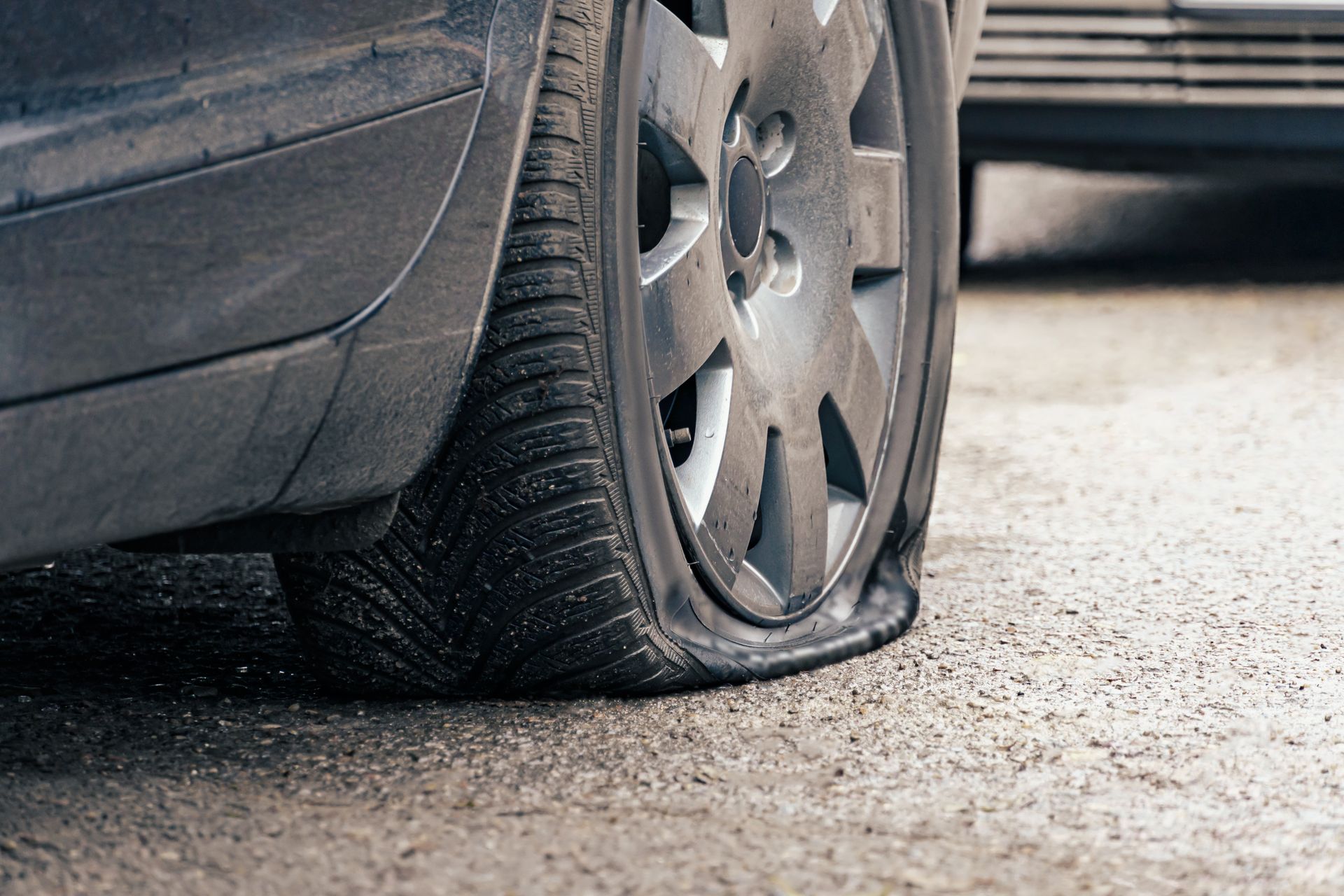
How the Repair Decision Gets Made and What Follows
Industry repair standards define a specific zone on the tire where puncture repair is appropriate—generally the central tread area within defined distance from the shoulder, and limited to punctures no larger than a quarter inch in diameter. Damage outside that zone, including any puncture in the sidewall or shoulder, cannot be safely repaired because those areas flex under load and a patch in a high-flex zone will not hold. When damage falls outside the repairable zone, replacement is the only safe option regardless of the tire's remaining tread depth.
A properly completed internal repair holds as a permanent fix under normal operating conditions—the patch bonds to the inner liner while the plug fills the puncture channel through the casing, sealing both the air barrier and the entry point. Once remounted and inflated to the correct pressure, the repaired tire performs the same as it did before the puncture. Drivers returning to highway speeds after a repair on a tire that was properly fixed will not notice any difference in handling or feel compared to the undamaged tires on the vehicle.
When replacement is necessary, Grave's Tire Service identifies a matching or compatible replacement to maintain consistent handling across the axle. Running a significantly different tread pattern or wear level on the same axle affects braking balance, particularly during hard stops where the axle with mismatched tires may not brake evenly.
Questions About Flat Tire Repair and Replacement
These questions address how flat tire service decisions are made and what the repair or replacement process involves for the types of vehicles serviced in Carthage.
What determines whether a flat tire can be repaired or must be replaced?
The location and size of the damage are the two controlling factors. Punctures in the central tread area within the industry-defined repairable zone and no larger than one quarter inch in diameter are candidates for permanent repair. Sidewall damage, shoulder punctures, and tires that show internal structural damage from running flat are not repairable and require replacement.
Why is a plug-only repair from the outside considered a temporary fix?
An external plug seals the puncture channel but does not address the inner liner, which is the actual air barrier inside the tire. Without an interior patch bonded to the liner, air can migrate between the cords and belts of the casing over time, leading to pressure loss that restarts the cycle.
How is internal tire damage from running flat identified?
The tire must be dismounted from the rim to inspect the inner liner for folding, cracking, or separation in the bead and sidewall areas. These failures result from the casing collapsing under vehicle weight without air pressure to support it, and they are not visible from the outside of a mounted tire.
What valve stem issues cause flat tire symptoms without a visible puncture?
A valve stem with a failing core will allow air to escape slowly when the core seal degrades, producing progressive pressure loss identical to a slow puncture. Corroded or cracked stems at the rim base can also leak from the point where the stem meets the wheel, particularly on older wheels common on the mix of trucks and passenger vehicles driven throughout Carthage.
What should be checked on the wheel itself before a replacement tire is mounted after a flat?
The rim should be inspected for bends or cracks, particularly if the flat resulted from a pothole or curb strike—a bent rim will prevent the new tire from seating correctly and may cause persistent air loss at the bead. Rim lip damage from driving on a flat is also common and needs to be addressed before remounting.
Grave's Tire Service handles flat tire repair and replacement for drivers throughout Carthage, working through the inspection process to give you an accurate assessment of what the damage requires. Pull in with your damaged tire or vehicle and get a direct answer on whether repair or replacement is the right call.