
Tires That Wear Evenly Across All Four
Tire rotation in Carthage for vehicles showing uneven tread wear or approaching manufacturer service intervals
Grave's Tire Service performs tire rotation in Carthage for drivers whose vehicles are developing uneven tread patterns or have reached the mileage point where rotation is due. Because most vehicles distribute braking, steering, and drive forces differently across each axle position, the tires at each corner wear at different rates—front tires on front-wheel-drive vehicles, for example, carry the load of both steering and acceleration, and wear measurably faster than the rears. Rotating tires on a schedule corrects for this imbalance before it becomes permanent.
The rotation pattern selected at Grave's Tire Service is matched to the specific vehicle: front-wheel-drive, rear-wheel-drive, all-wheel-drive, and directional or staggered tire setups each require a different sequence to move tires through positions correctly without violating manufacturer recommendations. During rotation, the technician inspects each tire as it comes off the vehicle, checking tread depth and looking for damage that only becomes visible once the tire is removed from its usual position and examined directly.
Arrange a rotation service at Grave's Tire Service to have your tire positions evaluated and adjusted according to your vehicle's specific drive configuration.
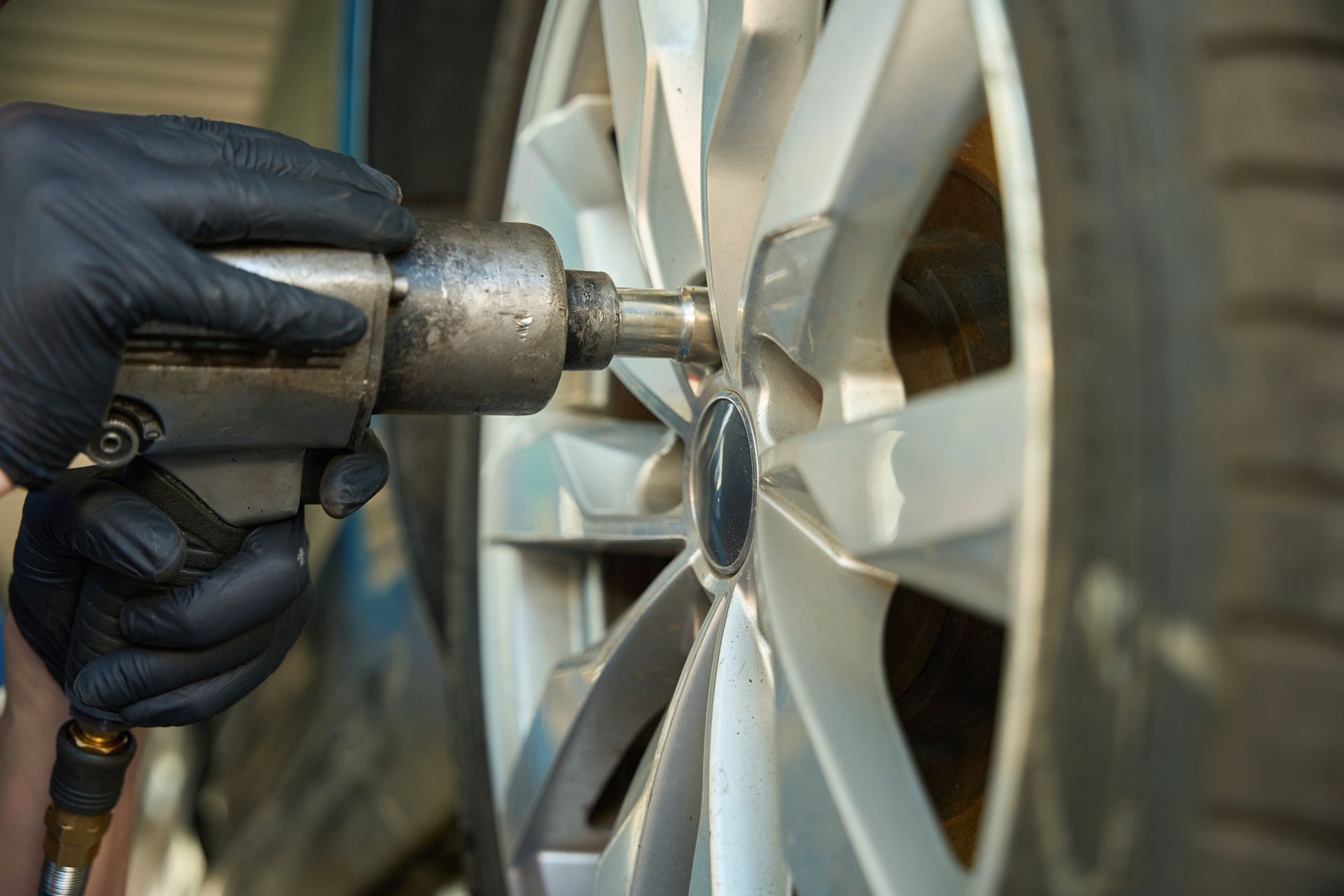
How Rotation Patterns Affect Tire Lifespan
Each rotation pattern moves tires through positions in a specific sequence so that every tire spends time in each location over its service life. A forward cross pattern, commonly used on front-wheel-drive vehicles, moves the front tires straight back and crosses the rears to the front. An X-pattern moves all four tires diagonally. For vehicles with full-size matching spare tires, a five-tire rotation can be included to distribute wear across the spare as well, extending the functional life of the full set.
After rotation is complete, you will notice tread depth is more consistent across all four tires rather than the fronts wearing thin while the rears remain deeper. Over multiple rotation intervals, this consistency means the full set approaches replacement mileage together rather than forcing early replacement of two tires while two are still serviceable.
Vehicles with directional tires or performance fitments that use different sizes front and rear require side-to-side rotation rather than cross-axle movement, and in some cases those setups limit rotation options entirely—a detail worth clarifying before assuming a standard pattern applies to your vehicle.
What Drivers Ask About Tire Rotation
Drivers in Carthage ask similar questions about rotation timing and procedure, particularly for trucks and SUVs that see a mix of highway miles and surface road use across this part of East Texas.
What rotation pattern is used for all-wheel-drive vehicles?
All-wheel-drive vehicles typically use an X-pattern or rearward cross pattern, because all four wheels transmit power and wear can vary in less predictable ways than on a two-wheel-drive layout—your vehicle's owner manual specifies which pattern the manufacturer requires.
How is tread depth measured during a rotation service?
A tread depth gauge is inserted into the main grooves at multiple points across the tire face to capture wear readings at the center and shoulders, giving a complete picture of whether the tire is wearing evenly or showing edge wear that suggests an inflation or alignment issue.
Why do front tires on front-wheel-drive vehicles wear faster than rears?
Front tires handle steering input and transmit drive force simultaneously, generating more heat and friction at the contact patch than rear tires that only follow the vehicle's direction—this is why rotation is especially important on front-wheel-drive cars and crossovers.
What happens if a vehicle has a spare tire included in the rotation?
When the spare is a full-size matching tire, it can be worked into a five-tire rotation sequence, moving through each position over time so the spare remains in usable condition and the overall set wears more uniformly.
How does rotation affect handling after the service is done?
After tires are rotated into new positions, you may notice a brief adjustment period as the vehicle responds to tires with slightly different wear depths at each corner, but handling stabilizes quickly and the overall traction balance across all four tires improves compared to leaving worn fronts in place.
Grave's Tire Service is available to review your current tire positions, confirm the correct rotation pattern for your drivetrain, and complete the service with a full inspection of each tire. Grave's Tire Service also performs tire rotation in Marshall, Longview, Henderson, and Center.