Pressure Checks That Catch Problems Early
Tire pressure inspection in Carthage for vehicles showing uneven wear, handling changes, or suspected underinflation
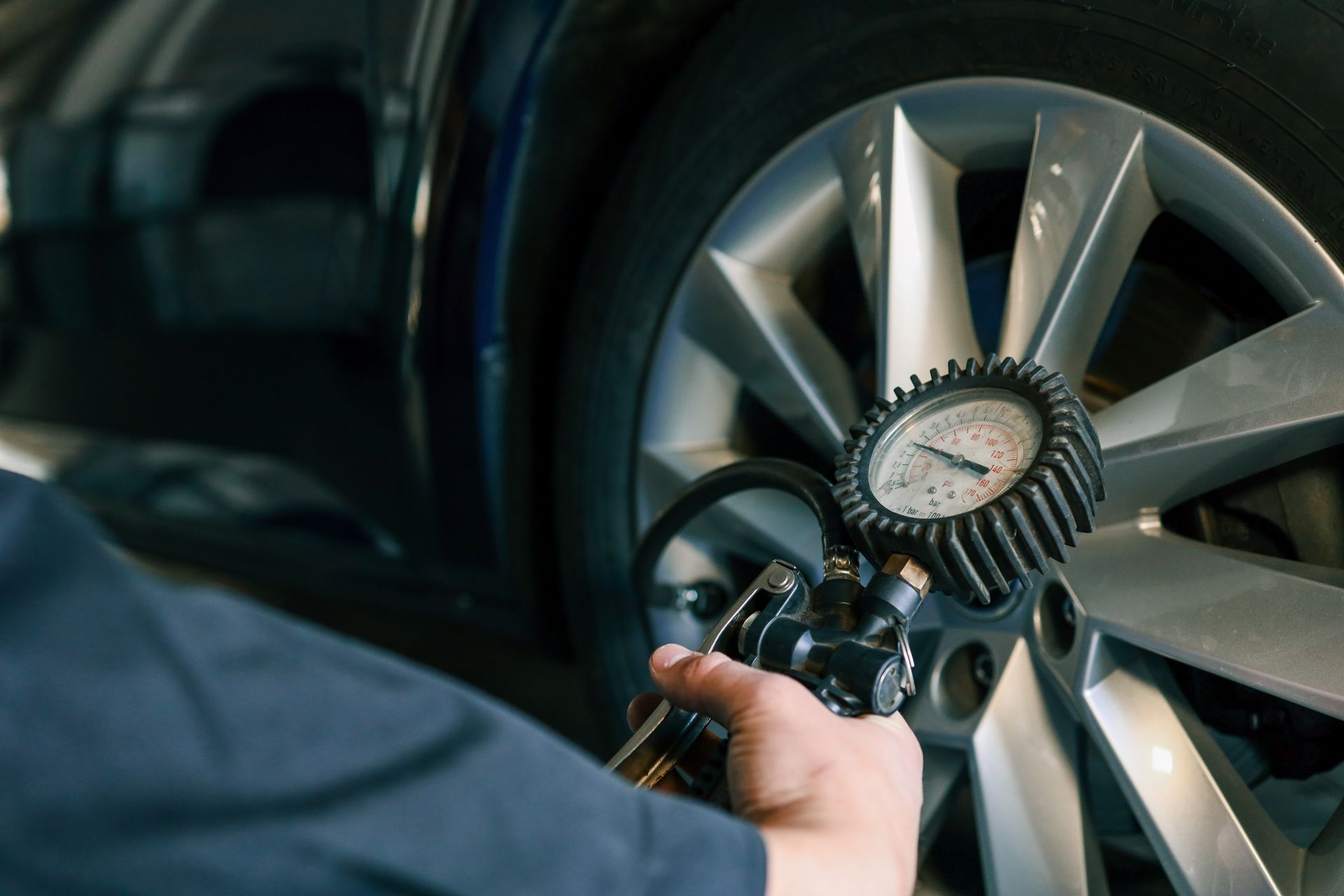
Tire pressure sits outside the range drivers can reliably detect by eye—a tire can lose 20% of its recommended pressure and still appear visually normal from the outside. Grave's Tire Service performs tire pressure inspections in Carthage, measuring actual pressure in all four tires, comparing readings to manufacturer specifications, and making adjustments where needed. The inspection also covers the condition of each valve stem, since a deteriorating stem is a common source of slow pressure loss that mimics a puncture.
The inspection process uses calibrated gauges to measure pressure in each tire, then references the vehicle door placard—not the tire sidewall—for the correct target pressure at that axle position. Front and rear axles frequently carry different recommended pressures, particularly on trucks and SUVs with significant payload capacity. When pressure is outside the correct range, tires are inflated or adjusted accordingly and re-measured to confirm the final reading before the vehicle leaves.
Have your tire pressures checked at Grave's Tire Service if you have noticed any change in steering feel, uneven tread wear, or more frequent pressure loss than usual.
Why Inflation Levels Affect More Than Tire Life
Underinflation and overinflation produce different but equally damaging effects on a tire's contact patch—the area of tread that actually touches the road. An underinflated tire flexes excessively through the sidewall, concentrates heat at the shoulders, and wears the outer tread edges faster than the center. An overinflated tire becomes rigid and contacts the road primarily through the center of the tread, creating accelerated wear down the middle while the shoulders remain relatively unworn. Both patterns are visible on a tire that has been running at the wrong pressure for an extended period.
Correcting pressure to the proper specification stops both wear patterns from progressing and restores the full contact patch that the tire was designed to use. Drivers typically notice that steering response becomes more consistent and that the vehicle tracks straighter without requiring constant small corrections—symptoms that felt like an alignment problem are sometimes resolved by pressure correction alone.
Valve stems are inspected alongside pressure readings because a stem that is cracking at the base or has a failing core allows air to escape slowly, making it difficult to maintain proper inflation between services. Replacing a failing valve stem is a straightforward fix that eliminates a recurring pressure problem without requiring tire removal in most cases.
What to Know About the Tire Pressure Inspection Process
The following questions focus on how pressure inspections work, what the readings reveal, and how the inspection connects to broader tire condition for vehicles in Carthage.
What reference is used to determine the correct tire pressure for a vehicle?
Pressure targets come from the vehicle manufacturer's placard, typically located on the driver-side door jamb. That figure accounts for the vehicle's weight distribution and intended load—using the maximum pressure listed on the tire sidewall instead can result in overinflation that stiffens the ride and reduces contact patch area.
How does a pressure inspection identify a slow leak versus a normal pressure drop over time?
All tires lose a small amount of pressure naturally as air molecules migrate through the rubber over weeks. A slow leak shows a faster, disproportionate drop in one tire relative to the others, and often originates at the valve stem, bead interface, or a small puncture that did not cause immediate deflation.
What visible changes on the tire surface indicate it has been running at the wrong pressure?
Underinflation produces accelerated wear across the outer shoulders of the tread while the center remains relatively intact. Overinflation does the opposite, wearing the center strip faster while shoulder tread stays relatively unworn. Both patterns are clear indicators that pressure has been outside specification for a meaningful period.
Why do trucks and SUVs in Carthage sometimes need different front and rear pressures?
Vehicles with higher rear payload ratings distribute weight differently across the axles when loaded, and manufacturers specify higher rear pressures to support that load without excessive sidewall flex. Running equal pressure front and rear on a truck that carries frequent loads can undermine rear tire performance and longevity.
How often should tire pressure be checked outside of regular service intervals?
Pressure should be verified any time a tire shows unusual wear, handling feel changes, or a warning light activates. Any tire that has been repaired or recently mounted should also be re-checked after the first week of use to confirm the bead seal and valve stem are holding correctly.
Grave's Tire Service provides tire pressure inspections for passenger vehicles, trucks, and fleet vehicles across Carthage. Stop in for a full four-tire pressure check and valve stem inspection to confirm your tires are set correctly for your vehicle and load.