
Vibrations That Point to a Balancing Problem
Tire balancing in Carthage for vehicles with steering wheel vibration or uneven ride quality tied to wheel assembly imbalance
A steering wheel that shakes at highway speeds, or a vibration that travels through the floor or seat at a specific speed range, typically traces back to a wheel and tire assembly that is not balanced correctly. Grave's Tire Service performs tire balancing in Carthage to identify and correct weight distribution across the wheel and tire combination—restoring ride quality and reducing the stress that imbalance places on suspension components over time.
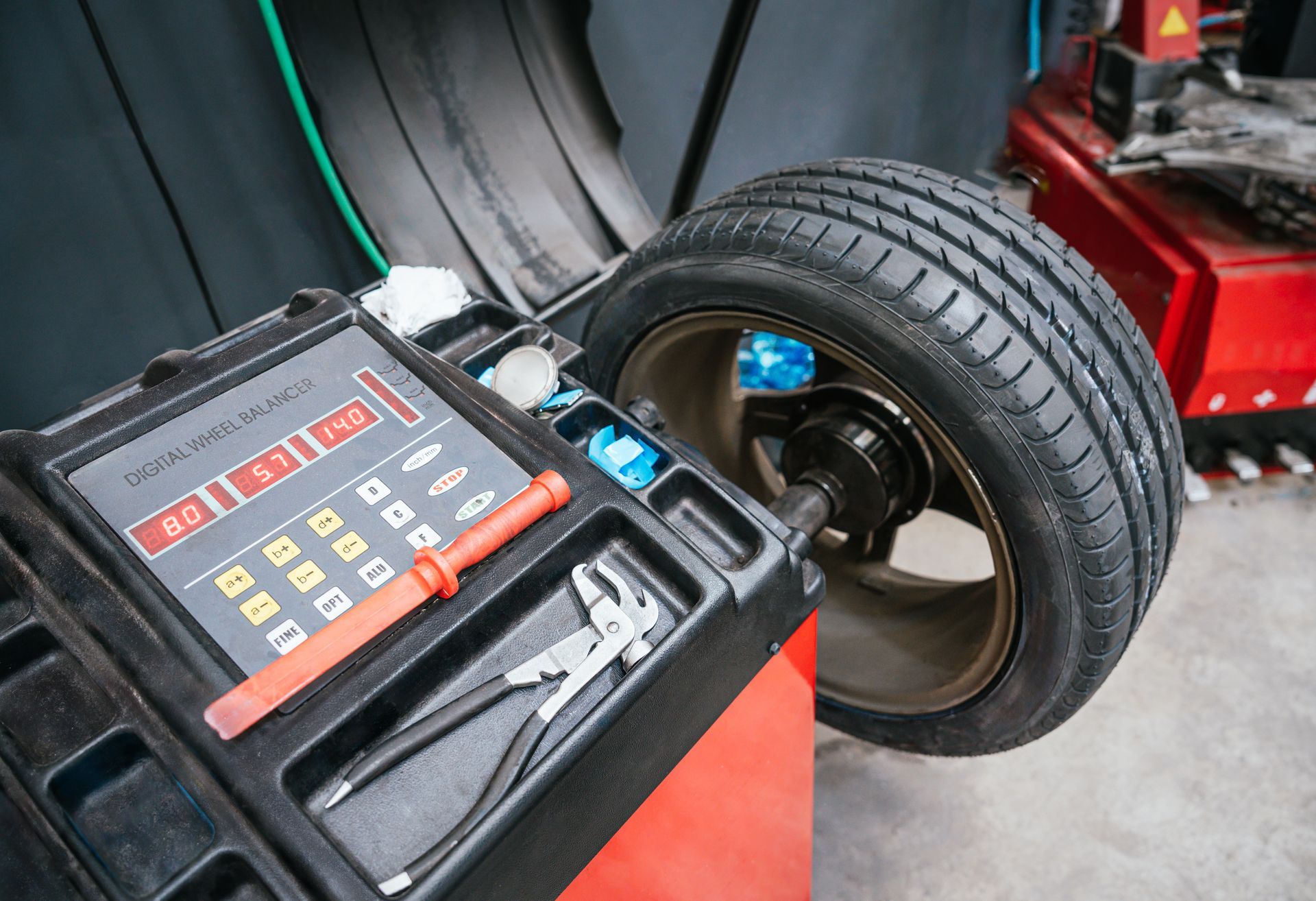
The balancing process begins by mounting the wheel and tire assembly on a spin balancer, which rotates the assembly and measures where weight is unevenly distributed. The machine identifies both static imbalance—where the heavy spot causes a simple up-and-down bounce—and dynamic imbalance, where weight is offset side to side and causes the wobble or shimmy that drivers feel through the steering. Small counterweights are then applied at precise positions on the rim to bring the assembly into balance.
Set up a balancing appointment at Grave's Tire Service to have your wheel assemblies measured and corrected based on what the spin balance reading actually shows.
What the Balancing Process Addresses Directly
During balancing, the spin balancer displays the exact amount and position of imbalance in each assembly, giving the technician the specific counterweight value needed at each location rather than relying on guesswork. Weights are attached to the rim—either clip-on weights that hook to the rim edge or adhesive weights placed on the inner barrel, depending on the wheel type and whether the appearance of the outer rim needs to be preserved.
Once the corrected assemblies are remounted, the vibration that was present at 55 to 70 miles per hour typically disappears, and the ride becomes noticeably smoother on the same roads where shaking was present before. Beyond ride comfort, correcting imbalance reduces the repetitive loading on wheel bearings, tie rod ends, and struts that occurs when an out-of-balance tire bounces through its rotation cycle mile after mile.
Balancing is also relevant after a new tire is mounted, after a flat repair, or any time a wheel weight is lost—which can happen on rough road surfaces or from contact with a curb. Drivers who notice vibration returning after a previous balance service may have lost a weight, which is a straightforward cause to check before assuming a more involved suspension issue.
Answers About How Tire Balancing Works
These questions address how the balancing process works and what conditions call for it, including situations common with the truck and full-size vehicle mix in Carthage.
How does a spin balancer detect where imbalance is located?
The machine rotates the assembly at speed and uses sensors to measure the force variation at specific points around the circumference, then calculates both the amount of weight needed and the exact position on the rim where it should be placed.
What is the difference between static and dynamic imbalance?
Static imbalance means the heavy spot is in one place around the circumference and causes a bounce, while dynamic imbalance means weight is distributed unevenly across the width of the tire and causes a side-to-side shimmy—most balancing equipment addresses both in a single spin.
Why does vibration appear only at certain speeds and not others?
Imbalance creates a rhythmic force that builds as rotation speed increases, reaching a resonant frequency at a particular speed range where the vibration becomes most noticeable—below or above that range it may be less obvious, which is why some drivers only notice the problem during highway driving.
How does wheel type affect which balancing weights are used?
Alloy wheels with exposed outer faces typically receive adhesive weights placed inside the barrel to avoid visible attachment points on the rim face, while steel wheels commonly accept clip-on weights on the rim edge where appearance is not a concern.
When should balancing be done in addition to routine rotation?
Balancing should be performed whenever a new tire is mounted, after a puncture repair that involves removing the tire from the rim, or when a driver notices vibration returning after a previous balance—any of these situations can change the weight distribution of the assembly.
Grave's Tire Service can spin-balance your wheel assemblies, apply the correct counterweights for your rim type, and confirm the result before the vehicle leaves the shop. Grave's Tire Service also performs tire balancing in Marshall, Longview, Henderson, and Center.